Every owner asks the same first question before signing a lease: what will the commercial buildout cost? It is a fair question with an annoying answer. The number depends on what the landlord hands you, what your business needs inside the walls, and which building department reviews the plans.
2027 adds a new variable. The 9th Edition of the Florida Building Code took effect on December 31, 2026, so most projects permitted this year are designed and inspected under the new rules. Labor in Miami-Dade, Broward, and Palm Beach counties is still tight, and South Florida buildings carry hurricane and humidity requirements that inland markets never price in.
This guide breaks down what a commercial buildout in South Florida really costs per square foot, by type of space, with extra attention on gyms, fitness studios, and wellness spaces. Those projects get underestimated more than almost any other use. You will see where the money goes, which soft costs catch owners off guard, how tenant improvement allowances help, and what to lock down before you sign.
In This Article:
- What a commercial buildout actually covers
- Commercial buildout cost per square foot in South Florida
- Why gyms, studios, and wellness spaces cost more
- Shell condition changes the number more than finishes
- The 9th Edition Florida Building Code and your 2027 budget
- Permits, soft costs, and the cost of waiting
- How tenant improvement allowances offset the cost
- Sample commercial buildout budget for a fitness studio
- How to keep a commercial buildout on budget
What a commercial buildout actually covers
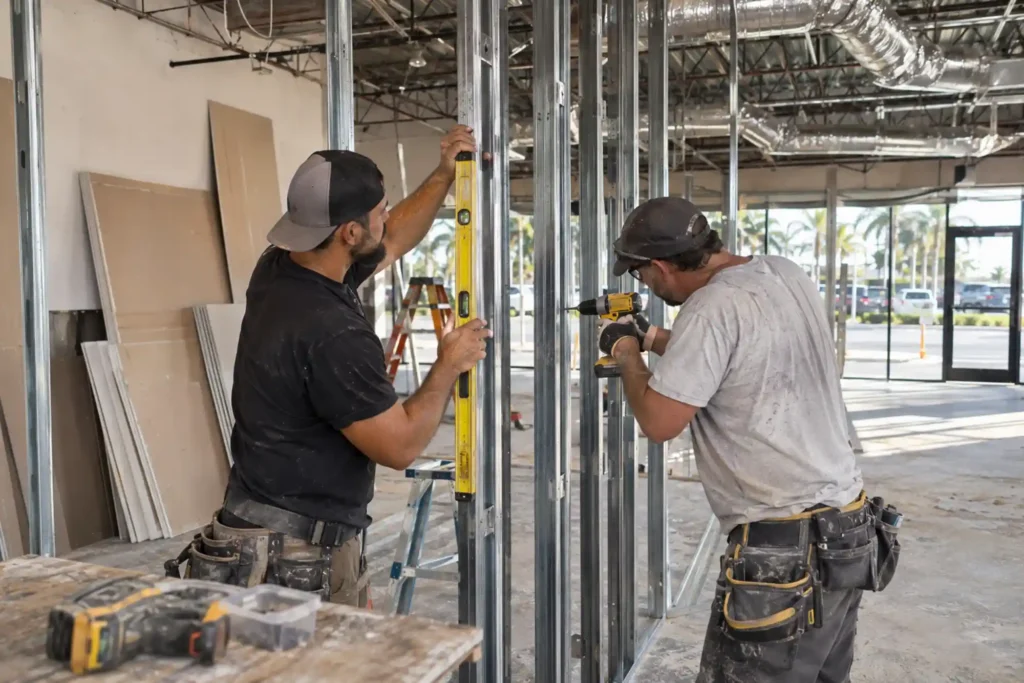
A commercial buildout is the construction work that turns an empty or outdated space into a working business. In a lease, you will often see it called a tenant improvement, or TI. In a new building, it is the interior work that follows the shell.
A typical scope includes:
- Demolition of the previous tenant’s walls, ceilings, and finishes
- New framing, drywall, doors, and ceilings
- Mechanical, electrical, and plumbing work (MEP), including new air conditioning zones, panels, and restrooms
- Fire alarm and sprinkler changes to match the new layout
- Accessibility upgrades to entrances, restrooms, and the route to them
- Flooring, paint, millwork, lighting, and storefront work
What usually sits outside the construction contract matters just as much. Furniture, gym equipment, kitchen equipment, signage, low voltage data cabling, and security systems are often bought separately. When two bids look $60,000 apart, the gap is often a scope line one contractor included and the other left out. Ask every bidder to spell out exclusions in writing.
Commercial buildout cost per square foot in South Florida
Per square foot pricing is the fastest way to sanity check a budget, as long as you treat it as a range and not a quote. The figures below reflect cost guides published for the Miami market and the broader U.S. during 2026. Use them for early planning. A walkthrough and a set of drawings will move your real number up or down.
Office space
Professional office buildouts in South Florida commonly land between about $90 and $200 per square foot. A light refresh with paint, carpet, and a few new walls sits at the bottom. Class A space in Brickell or downtown Fort Lauderdale with glass offices, conference rooms, and a finished break room sits at the top.
Retail stores
Retail finish-outs generally run from about $85 to $180 per square foot. Brand standards drive most of the spread. A national franchise with required fixtures, lighting packages, and storefront specs sits near the top. A local boutique that sets its own look usually lands lower. See our guide to retail store construction in Miami for the full project sequence.
Gyms, fitness studios, and wellness spaces
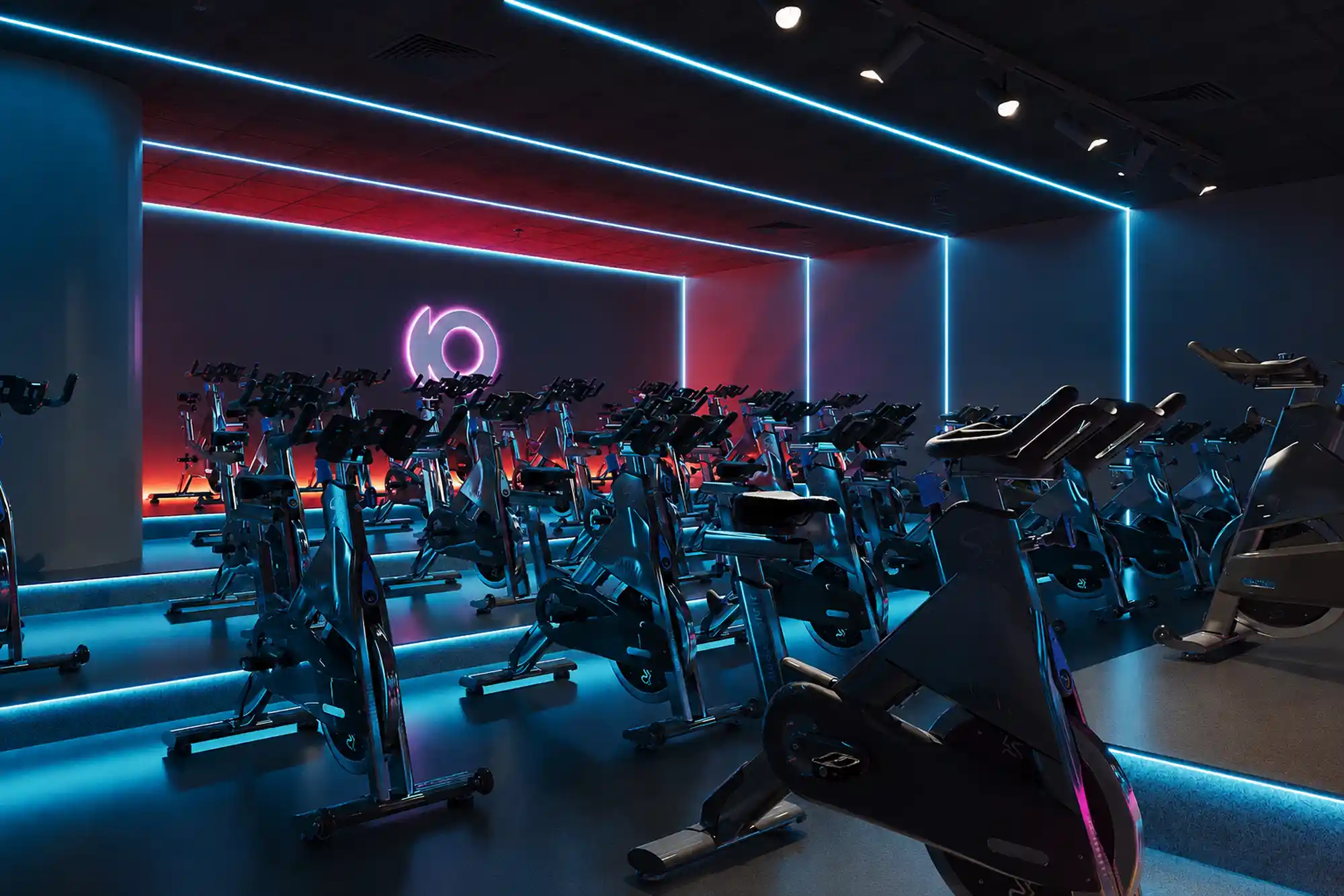
Fitness is where budgets swing the most. National planning guides place boutique studios (yoga, Pilates, cycling, small group training) around $50 to $100 per square foot for construction, and full service gyms with locker rooms and showers around $100 to $150. Miami estimates for personal care and fitness uses run higher, roughly $100 to $250 per square foot, once plumbing, specialty flooring, and heavier mechanical loads come into play. Equipment is extra.
Restaurants and hospitality
Restaurants carry the highest costs of any common tenant type because of kitchen exhaust, grease interceptors, gas, and fire suppression. In Miami, published ranges run from about $200 to $450 per square foot, and fine dining goes higher. We break this down in detail in our restaurant buildout cost guide for Miami and Fort Lauderdale.
Medical and clinical wellness
Medical offices, med spas, and treatment clinics often fall in the $150 to $250 per square foot range. Sinks in every room, extra electrical circuits, sound separation between treatment rooms, and stricter accessibility details add up quickly.
Why gyms, studios, and wellness spaces cost more
On a site walk, a former retail box can look like an easy gym. Open floor, high ceiling, parking out front. The trouble shows up once the engineers run their numbers. A fitness use puts far more load on a building than the store that left, and South Florida weather makes several of those loads worse. If you are early in the process, our article on commercial gym construction in South Florida covers site selection and occupancy in more depth. Here is where the money goes.
The floor and the slab
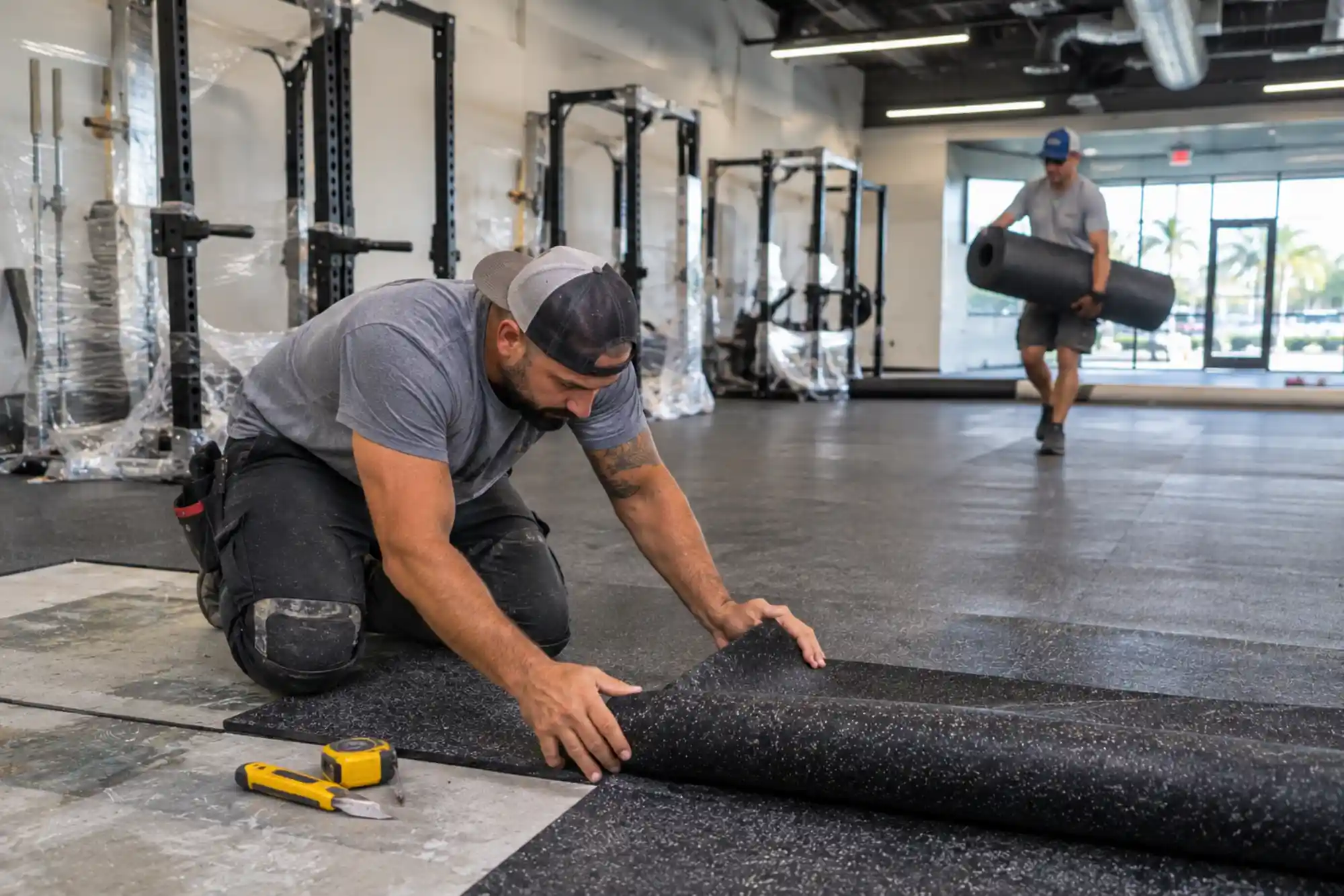
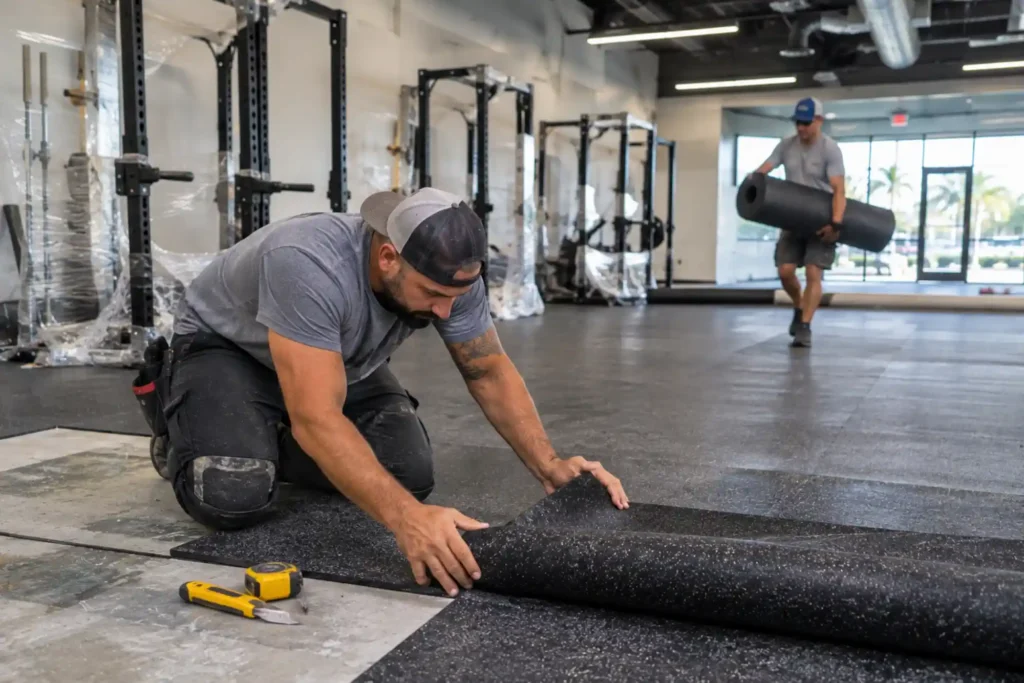
Rubber flooring for free weight areas often costs $8 to $15 per square foot installed, and sprung wood floors for Pilates, yoga, or dance cost more. On a second floor, dropped weights and loaded racks may require a structural engineer to confirm the floor can carry them. Learning that before you sign is far cheaper than learning it during plan review.
Air conditioning and humidity
Forty people on bikes generate a lot of heat and moisture. In Miami or Hollywood, the system has to remove humidity as well as cool the room, or mirrors fog and floors get slick. When the existing rooftop units are undersized, upgrades can run $15 to $30 per square foot. Ask for a mechanical engineer’s review of the existing equipment before the lease is final, and try to make the landlord responsible for replacing units near the end of their life.
Electrical service
Treadmills, sound systems, saunas, and cold plunge equipment often need far more power than the previous tenant used. Electrical work for a fitness use commonly adds $10 to $25 per square foot, and a service upgrade from the utility can add weeks. Confirm the available amperage at the panel early.
Locker rooms and showers
Showers bring drainage, water heaters, waterproofing, ventilation, and accessible stalls. In the wet areas, plumbing alone can run $20 to $40 per square foot. Saw cutting the slab to run new drain lines is one of the most common surprise costs we see in older Broward and Miami-Dade plazas.
Sound control
A spin studio next to a dental office or above an apartment needs acoustic work: isolated flooring, insulated walls, and sometimes resilient ceiling assemblies. It rarely shows up in an early budget, and neighbors and landlords will hold you to it later.
Shell condition changes the number more than finishes
Owners tend to focus on finishes because they can see them. Shell condition, the state of the space on the day you get the keys, usually has a bigger effect on the final bill.
Cold dark shell
Bare slab, no ceiling, no restrooms, no air conditioning distribution, sometimes no electrical panel. Everything is new, so cost per square foot sits at the high end of every range above. You also get a clean start with no hidden problems behind the walls.
Warm or vanilla shell
The landlord delivers restrooms, a ceiling grid, basic lighting, and an air conditioning system with ductwork. You pay for the layout and finishes on top. This is the most common starting point in newer centers in Doral, Sunrise, and Boca Raton.
Second generation space
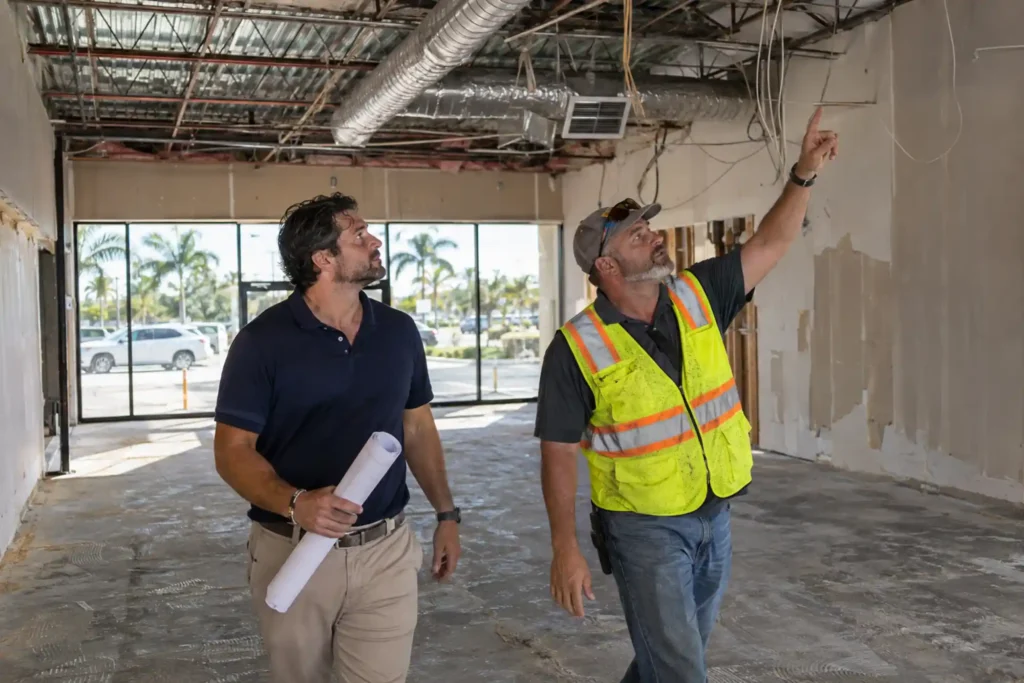
A former restaurant, gym, or office with usable systems left behind. Reusing a hood, a grease interceptor, or a set of showers can save a large share of the budget. The risk is what you cannot see: code violations from the old tenant, failing equipment, or open permits that must be closed before your permit can be issued. Budget for a careful site investigation and a permit history search before you count on any savings.
When two spaces have similar rent, the one with better systems in place almost always wins once construction is priced.
The 9th Edition Florida Building Code and your 2027 budget
Florida updates its building code every three years. The 9th Edition (2026) of the Florida Building Code became effective statewide on December 31, 2026. Miami-Dade County’s permitting center announced that all permit applications and plans submitted on or after that date must comply with the new edition. You can review the code itself on the Florida Building Commission website.
For a 2027 commercial buildout, that means three practical things:
- Drawings must be prepared to the new edition. If your architect started plans in 2026 under the 8th Edition and you submit in 2027, expect revisions. Ask your design team which edition the drawings follow before anyone submits.
- Electrical work follows a newer national code. The 9th Edition cycle adopts the 2023 National Electrical Code, which can affect panel, receptacle, and equipment details on fitness and restaurant projects with heavy loads.
- Product approvals need to match. Storefronts, doors, and windows in Miami-Dade and Broward fall inside the High-Velocity Hurricane Zone. Any new exterior opening needs a product approval that is valid under the code your permit follows.
Code changes rarely add a dramatic percentage to an interior buildout. They do cause redesign time and resubmittals, and those delays cost money in rent. Ask your contractor and designer to confirm code edition questions at the start.
Permits, soft costs, and the cost of waiting
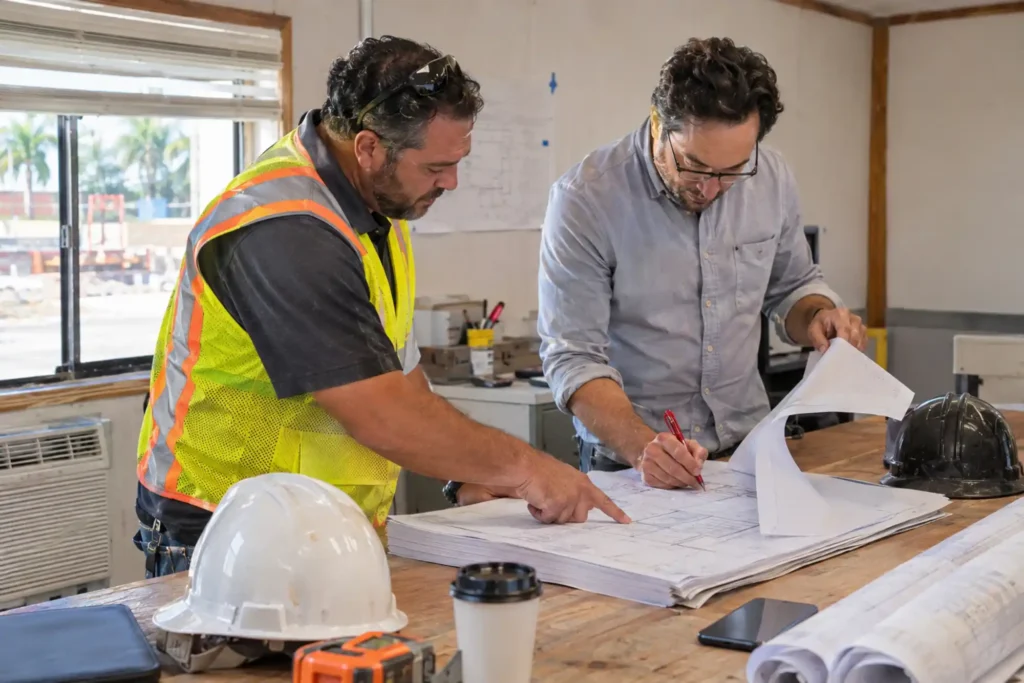
Hard costs are the construction itself. Soft costs are everything else, and they regularly add a meaningful share on top of the construction number. Owners who budget only the per square foot figure end up short.
Soft costs to budget for
- Architectural design and MEP engineering drawings
- Structural engineering when you add equipment loads, openings, or rooftop units
- Permit and plan review fees, which vary by city and by valuation
- Utility deposits and service upgrade fees
- Impact or concurrency fees when a change of use increases demand on roads or water service
- Testing, inspections, and fire alarm or sprinkler shop drawings
- A construction contingency, commonly 10 to 15 percent of hard costs
Accessibility is part of the budget
When you alter a main area of a business, federal rules require the path of travel to that area, including entrances and the restrooms serving it, to be made accessible. Spending on that path of travel is considered disproportionate only when it exceeds 20 percent of the cost of the alteration, under 28 CFR 36.403. In older plazas with narrow restrooms or a stepped entry, plan for that 20 percent from day one.
The cost of waiting
Rent often starts before revenue does. Every week of plan review or rework is a week of rent, utilities, and insurance with no members, diners, or customers coming through the door. Florida set firmer deadlines for local building departments to act on complete permit applications starting in 2025, which helps. A complete, well coordinated submittal still matters most, because an incomplete one restarts the clock.
South Florida also has dozens of separate building jurisdictions. A buildout in Hollywood, one in unincorporated Miami-Dade, and one in West Palm Beach can follow different submittal rules, review sequences, and inspection habits. A contractor who works in all three counties will know those differences before they cost you a resubmittal.
How tenant improvement allowances offset the cost
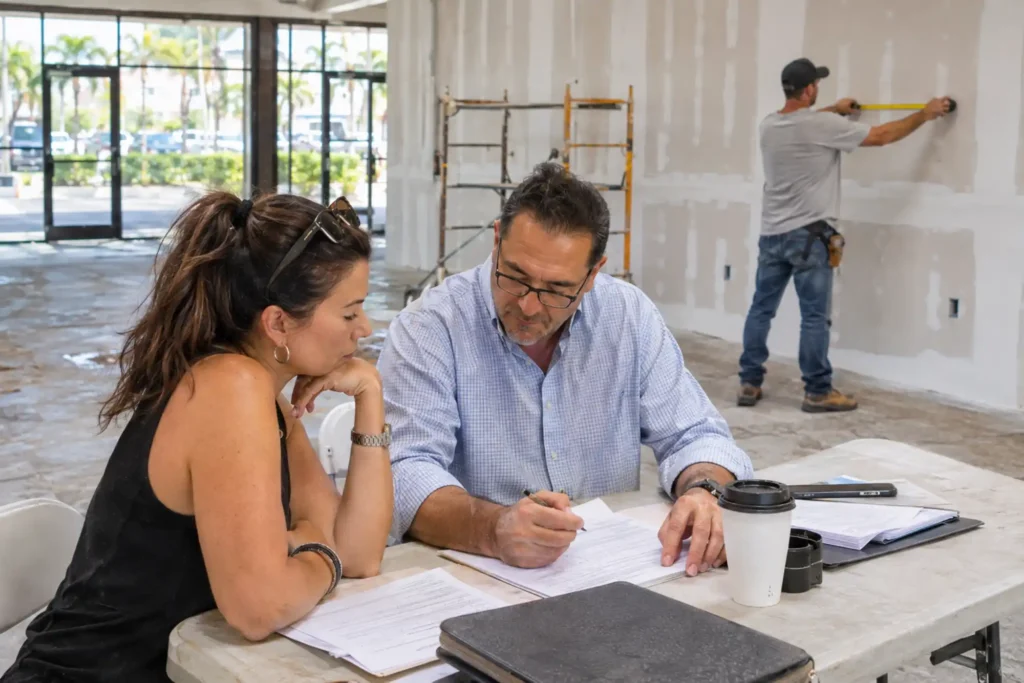
A tenant improvement allowance is money the landlord contributes toward your buildout, usually tied to lease length. Longer terms and stronger credit earn larger allowances.
Ranges vary widely by property type. Published 2026 figures put Class A office allowances in Miami at roughly $50 to $100 per square foot for leases of five to seven years. Fitness leases of five to ten years commonly see $30 to $60 per square foot. Small inline retail tenants in neighborhood centers often receive less.
To get full value from an allowance:
- Get a dollar figure, not a promise. “Landlord will deliver turnkey” is hard to enforce. A specific amount per square foot, paid against invoices and lien waivers, is not.
- Read the work letter. It defines what the landlord builds, what you build, and who pays for overruns.
- Ask about free rent. Landlords often give up months of rent more easily than a higher allowance, and free rent during construction protects your cash.
- Price the buildout before you sign. A contractor’s preliminary estimate tells you how much of the project the allowance actually covers and how much will come from your pocket.
Sample commercial buildout budget for a fitness studio
Here is how the numbers come together for a hypothetical 3,000 square foot boutique fitness studio in a Broward strip center. This is an illustration built from the planning ranges above, not a quote. Your space, design, and city will change it.
Scenario A: second generation retail space
The space has two restrooms, a working air conditioning system, and a ceiling. The scope adds one studio room, a lobby with a front desk, a small retail wall, two single user changing rooms, rubber and wood flooring, upgraded lighting, sound, and acoustic walls. At roughly $75 to $120 per square foot, construction lands around $225,000 to $360,000. Add soft costs and contingency on top.
Scenario B: cold dark shell
The same program in a bare space needs new restrooms, a full air conditioning system and ductwork, a new electrical panel, ceilings, and storefront work. At roughly $130 to $200 per square foot, construction lands around $390,000 to $600,000 before soft costs.
What moves the number within each range
- Showers instead of changing rooms
- Air conditioning capacity for high intensity classes
- A sauna, cold plunge, or infrared room that needs dedicated circuits and drainage
- Floor leveling under specialty flooring
- Accessibility upgrades required on the path of travel
The gap between the two scenarios is often bigger than any finish decision you will make. That is why space selection is a construction decision as much as a real estate decision.
How to keep a commercial buildout on budget
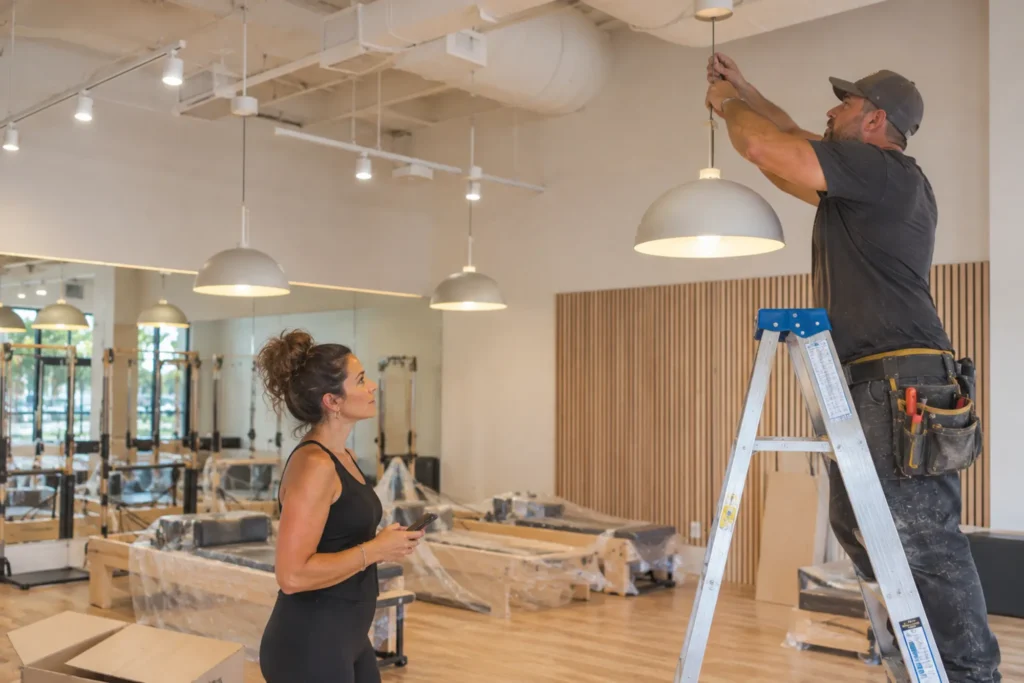
Most overruns trace back to decisions made before construction starts. These habits keep a commercial buildout predictable:
- Bring a contractor in before you sign the lease. A site walk with a commercial general contractor can catch an undersized electrical service, a missing grease interceptor, or a slab issue while you can still negotiate.
- Pull the permit history. Open or expired permits from a past tenant can hold up your permit. Find them early.
- Lock the scope before pricing. Changes during construction cost more than the same change on paper. Finish the drawings, then bid.
- Compare bids line by line. Look at allowances, exclusions, and who pulls which permits. The lowest number is often the least complete one.
- Order long lead items early. Rooftop units, electrical gear, storefront systems, and specialty flooring can take weeks or months. Late equipment delays every trade behind it.
- Verify the license. Confirm your contractor’s certified general contractor license on the Florida DBPR license lookup, along with insurance and experience with your type of space.
- Keep the contingency for real surprises. Treat it as protection for hidden conditions, not a fund for upgrades.
Choose one team for permits and construction
A good contractor relationship also means one point of accountability. When the same team handles preconstruction, permitting, and the buildout itself, problems get solved in the field instead of in a string of emails between vendors. Our our contractor hiring guide for Miami lists the questions worth asking before you sign.
The short answer on commercial buildout cost
A commercial buildout in South Florida in 2027 can cost under $100 per square foot for a light office or retail refresh, or more than $400 for a full restaurant kitchen. Gyms, studios, and wellness spaces fall in between, and they carry the most hidden costs in flooring, air conditioning, electrical service, and wet areas. Shell condition, soft costs, accessibility work, and the new 9th Edition code will shape your real number as much as your finish choices.
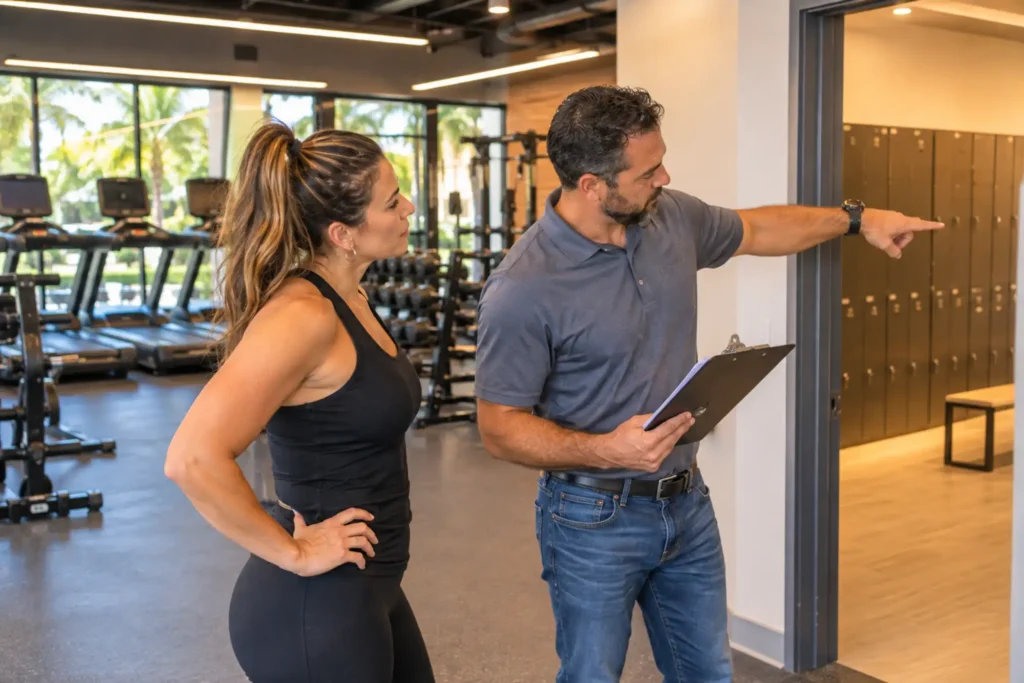
The best protection is an accurate budget before you commit to a space. NAR Construction Development is a licensed and insured commercial general contractor (#CGC1537470) based in Hollywood, FL, building retail stores, restaurants, offices, gyms, studios, and wellness spaces across Miami-Dade, Broward, and Palm Beach counties. We walk sites with owners and tenants before the lease is signed, price the work against real conditions, and manage permits through closeout.
Planning a buildout in Miami, Fort Lauderdale, Boca Raton, or anywhere in between? Contact NAR Construction Development to schedule a site walk and get a buildout estimate you can plan around. You can also explore our commercial construction services to see the full range of projects we build.