Choosing the right commercial buildout contractors in Miami is one of the most consequential decisions a business owner, tenant, or developer will make on the path to opening doors. The contractor you hire controls your schedule, your budget, and the quality of the space your customers will walk into. A strong partner moves your project through permitting and inspections cleanly. A weak one creates delays that push back your opening, drain your reserves, and strain your lease obligations.
This guide walks you through exactly what to look for before you sign. You will learn how to verify licensing and insurance, why local permitting experience in Miami-Dade, Broward, and Palm Beach matters, how to vet a contractor’s track record in your specific property type, and which contract terms protect you. By the end, you will know the questions to ask and the red flags to avoid, so you can hire with confidence and keep your buildout on schedule and on budget.
What Commercial Buildout Contractors Actually Do
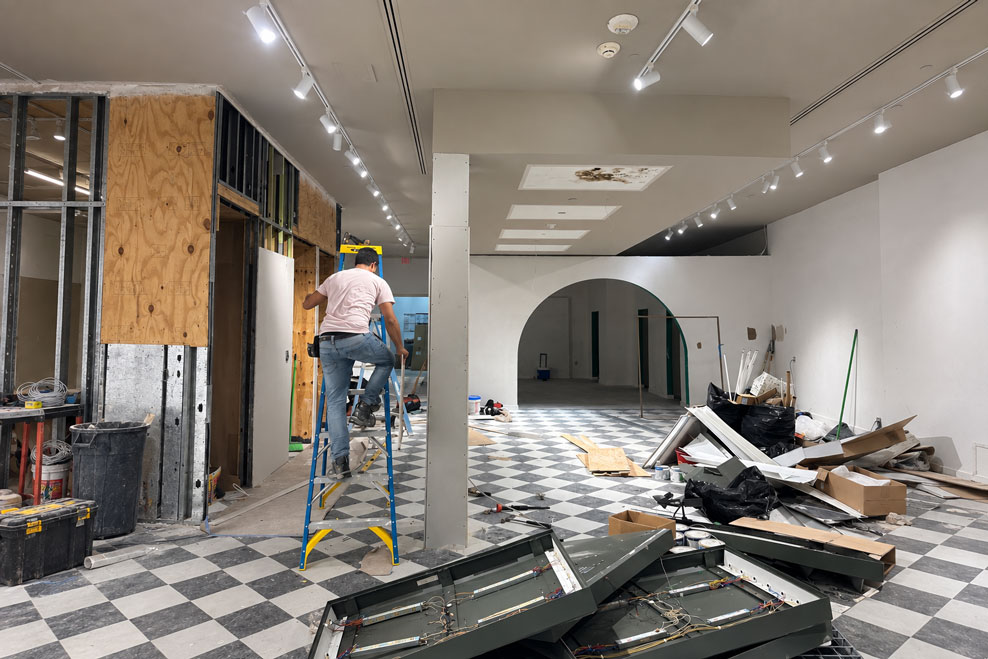
A commercial buildout, sometimes called a tenant improvement or commercial fit-out, is the process of transforming a raw or existing commercial space into a functional, code-compliant environment ready for business. This is a different discipline from residential work, and it requires a different kind of contractor.
Commercial buildout contractors coordinate architecture and engineering, secure permits, manage subcontractors, schedule inspections, and deliver a finished space that meets commercial building codes and accessibility standards. They handle the structural, mechanical, electrical, and plumbing systems that a retail store, restaurant, gym, or office requires at scale.
The best commercial contractors do more than swing hammers. They manage the project as a business outcome. They protect your timeline, flag cost risks early, and keep communication clear so you always know where your project stands. When you evaluate commercial builders, you are really evaluating a project management partner, not just a construction crew.

Why Local Experience in Miami-Dade, Broward, and Palm Beach Matters
South Florida is not a single, uniform jurisdiction. Miami-Dade, Broward, and Palm Beach counties each run their own permitting processes, and individual cities such as Miami, Hollywood, Fort Lauderdale, Boca Raton, and West Palm Beach layer their own requirements on top. A contractor who knows one city well may stumble in another if they do not understand the local rules.
Local commercial contractors understand the regional realities that drive cost and schedule. Miami-Dade enforces the High Velocity Hurricane Zone provisions of the Florida Building Code, which set strict standards for wind resistance, impact-rated glazing, and structural connections. A contractor unfamiliar with these requirements can specify the wrong materials and trigger costly rework after an inspection fails.
Local experience also means established relationships. A commercial construction company that works regularly with county and municipal building departments knows how each one prefers documents submitted, what inspectors look for, and how to keep a project moving when questions arise. That familiarity often translates directly into a faster, smoother approval process. When you hire commercial buildout contractors in Miami, regional fluency is not a nice extra. It is core to delivering your project on time.
Licensing and Insurance: Verify This First
Before any other conversation, confirm that your contractor is properly licensed and insured. In Florida, commercial general contractors must hold a state license issued through the Department of Business and Professional Regulation, or a registered local license in some scopes. Licensing is your baseline assurance that the contractor has met the experience and examination standards the state requires.
Ask for the license number and verify it directly through the state. Confirm the license is active, in good standing, and appropriate for the scope of your project. A handyman or a residential remodeler is not equipped to deliver a commercial buildout, and the license class will tell you whether the contractor is qualified.
Insurance is equally critical. A legitimate commercial construction company carries:
- General liability insurance that protects you if property is damaged during construction.
- Workers’ compensation coverage that shields you from liability if a worker is injured on your site.
- Builder’s risk coverage where appropriate, which protects the project itself during construction.
Request current certificates of insurance and confirm the coverage limits are adequate for your project size. Skipping this step exposes you to serious financial and legal risk. Reputable commercial contractors expect these questions and answer them without hesitation.
Permitting Knowledge That Keeps Your Project Moving
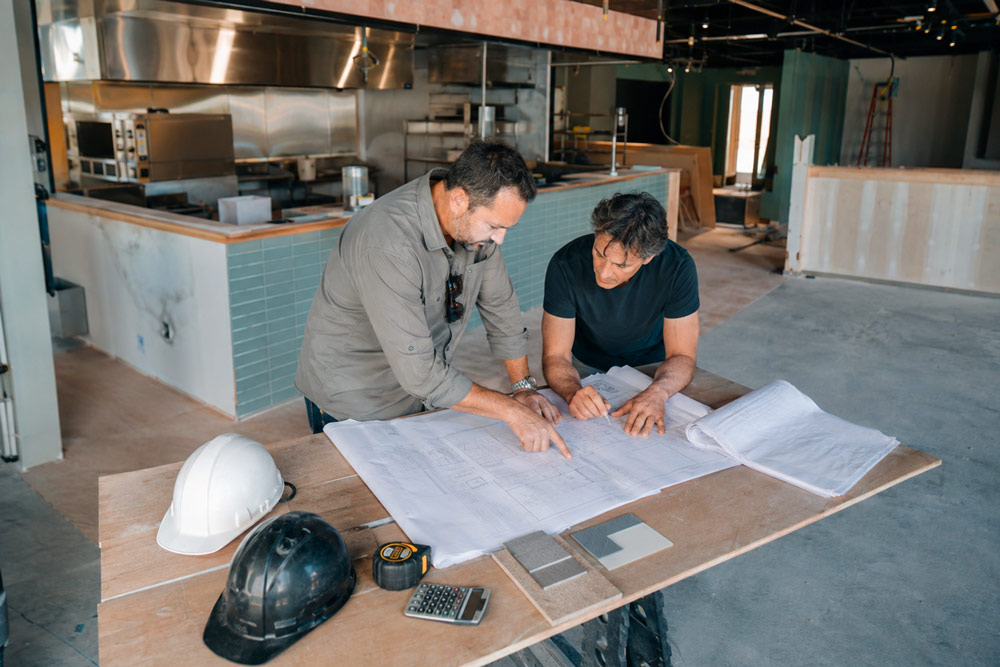
Permitting is where many commercial projects stall, and it is where an experienced contractor earns their value. Every commercial buildout in South Florida requires permits, and the process involves submitting plans, paying fees, passing plan review, and scheduling inspections at defined stages of construction.
Strong commercial buildout contractors manage this process proactively. They prepare complete, code-compliant plan sets that pass review the first time, or they anticipate reviewer comments and respond quickly. They know the difference between a simple interior buildout that may qualify for an expedited path and a project that triggers structural, fire, or change-of-use review.
Change of use is a common pitfall. Converting a former retail space into a restaurant, for example, introduces new requirements for grease interceptors, exhaust systems, occupancy loads, and accessibility upgrades. A contractor who recognizes these implications early protects you from mid-project surprises and budget overruns.
Ask any prospective contractor to walk you through the permitting path for your specific project. Their answer reveals how well they understand local requirements and how prepared they are to keep your buildout on schedule.
Proven Experience in Your Property Type
Commercial construction is not one trade. The skills, code knowledge, and subcontractor relationships needed for a restaurant differ significantly from those needed for a gym, an office, or a retail store. Look for commercial contractors with direct, demonstrable experience in your specific property type.
Retail stores construction demands clean storefronts, durable finishes, efficient layouts, and an understanding of how merchandising and customer flow shape the space. Retail contractors who have delivered similar projects know how to balance brand presentation with budget and code.
Restaurant and hospitality construction services involve some of the most complex commercial work. Kitchens require specialized mechanical, plumbing, gas, and ventilation systems, plus health department compliance. A commercial contractor experienced in restaurants and hospitality understands these systems and coordinates the inspections that protect your opening date.
Gyms, studios, and wellness space construction carries its own demands, including reinforced flooring, sound control, specialized ventilation, locker and shower facilities, and equipment loading. A commercial contractor who has built fitness and wellness spaces will anticipate these needs rather than discover them late.
Commercial office construction focuses on efficient layouts, data and electrical infrastructure, lighting, acoustics, and flexible spaces that support modern work. The right commercial interior general contractor delivers an office that functions for your team and reflects your brand.
When you interview commercial builders, ask to see completed projects that match your category. Direct experience in your property type is one of the strongest predictors of a successful buildout.
How to Evaluate Past Work and References
A contractor’s portfolio and references tell you more than any sales pitch. Reputable commercial builders are proud of their completed work and happy to share it. Ask for a portfolio of finished projects, ideally in your county and in your property type.
When you review past work, look beyond the photographs. Ask about the scope, the timeline, the budget, and any challenges the contractor navigated. A candid answer about a difficult project, and how the team solved it, often tells you more than a flawless highlight reel.
References matter just as much. Ask to speak with past commercial clients and prepare specific questions:
- Did the project finish on schedule and on budget?
- How did the contractor communicate throughout the project?
- Were change orders handled fairly and transparently?
- Would you hire this contractor again?
A commercial construction company with a strong reputation in Miami, Fort Lauderdale, Hollywood, and across South Florida will have references ready and a portfolio that demonstrates real, completed buildouts. If a contractor cannot provide either, treat that as a serious warning sign.

Understanding the Buildout Timeline and Phases
A clear, realistic timeline is a hallmark of a professional commercial contractor. Before you sign, you should understand the major phases your project will move through and roughly how long each takes. While every project differs, most commercial buildouts follow a recognizable sequence.
- Design and planning. Architecture and engineering develop the plans that define your space and satisfy code.
- Permitting. Plans are submitted for review, comments are addressed, and permits are issued.
- Demolition and rough-in. Existing elements are removed, and structural, mechanical, electrical, and plumbing systems are installed.
- Inspections. Building officials verify that rough-in work meets code before it is concealed.
- Finishes. Flooring, walls, ceilings, fixtures, and final details are installed.
- Final inspection and certificate of occupancy. The building department confirms the space is ready for business.
A trustworthy contractor sets realistic expectations for each phase and explains how local permitting and inspection schedules affect the overall timeline. Be cautious of any commercial builder who promises an unusually fast completion without explaining how they will achieve it. Honest timelines protect you, and they are a sign of a contractor who understands how commercial construction really works in South Florida.
Reading the Contract: Scope, Change Orders, and Payment Terms
The contract is your most important protection, and you should read it carefully before you sign. A well-written commercial construction contract defines the scope of work in detail, sets the price, establishes the timeline, and explains how changes and payments are handled.
The scope of work should be specific. Vague language invites disputes later. The contract should describe what is included, what is excluded, and the materials and finishes specified. The more detail, the fewer surprises.
Change orders are a normal part of commercial construction, but they should be governed by a clear process. The contract should require written, signed change orders before any additional work proceeds, with agreed pricing. This protects you from unexpected charges and keeps everyone accountable.
Payment terms should be tied to progress, not front-loaded. A reasonable schedule ties payments to completed milestones, with a final payment held until the work is finished and inspected. Be cautious of any contractor who demands a large payment up front before meaningful work begins.
A professional commercial contractor will welcome your questions about the contract and explain each provision clearly. If a contractor pressures you to sign quickly or resists putting commitments in writing, step back and reconsider.
Red Flags to Watch For Before You Sign
Even when a contractor looks impressive on the surface, certain warning signs should give you pause. Watching for these red flags before you sign can save you from a costly and stressful project.
- No verifiable license or insurance. If a contractor hesitates to provide proof, walk away.
- Pressure to sign quickly. Legitimate commercial contractors give you time to review the contract and ask questions.
- A bid far below the others. An unusually low price often signals cut corners, missing scope, or change orders that will appear later.
- Large upfront payment demands. Reasonable contractors tie payment to progress, not to signing.
- Vague or missing written scope. If the work is not defined in writing, you have little protection.
- No local references or portfolio. Experience in your county and property type should be easy to demonstrate.
- Poor communication during the bid. How a contractor communicates before the contract is a preview of how they will communicate during construction.
Trust your judgment. If something feels rushed, unclear, or evasive during the hiring process, those concerns rarely improve once construction begins.
Questions to Ask Before You Sign
A focused conversation reveals a great deal about whether commercial buildout contractors are the right fit for your project. Before you sign, ask:
- Are you licensed and insured for commercial work in my county, and can I verify it?
- Have you completed projects like mine in Miami-Dade, Broward, or Palm Beach?
- Who will manage my project day to day, and how will we communicate?
- What does the permitting path look like for my specific space?
- How do you handle change orders and unexpected conditions?
- What is your realistic timeline, and what could affect it?
- Can you provide references from recent commercial clients?
The quality and confidence of the answers tell you whether you are dealing with a seasoned commercial construction company or a contractor who is out of their depth. A strong commercial contractor answers directly, sets honest expectations, and makes you feel informed rather than pressured.
Build With Confidence: Partner With NAR Construction Development
Your commercial space is the foundation of your business, and the contractor you choose will shape how smoothly and successfully it comes together. By verifying licensing and insurance, confirming local permitting experience, vetting past work in your property type, and reading the contract carefully, you put yourself in a strong position to hire the right partner and avoid costly mistakes.
NAR Construction Development is a licensed commercial construction company based in Hollywood, Florida, serving business owners, tenants, and developers across Miami-Dade, Broward, and Palm Beach counties. We deliver commercial buildouts and ground-up construction for retail stores, restaurants, offices, gyms, studios, wellness spaces, and hospitality, with the local knowledge, permitting experience, and project management discipline your buildout demands.
If you are planning a commercial buildout in Miami, Fort Lauderdale, Hollywood, Boca Raton, West Palm Beach, or anywhere across South Florida, we would welcome the opportunity to discuss your project. Contact NAR Construction Development today to schedule a consultation and start your buildout with a commercial contractor you can trust.