Signing the lease in Wynwood or on Las Olas Boulevard is the easy part. The hard part starts about three weeks later, when your architect tells you the shell you fell in love with needs a new grease interceptor in the parking lot, a Type I hood with a roof penetration your landlord has not approved, and an electrical service that cannot carry the equipment schedule your concept requires. Restaurants are the most expensive tenant improvement in commercial construction. South Florida then adds High Velocity Hurricane Zone requirements, dozens of separate permitting jurisdictions, and a state food service licensing track that runs on its own clock next to the building department.
This guide gives you the 2026 numbers for Miami-Dade, Broward, and Palm Beach. Real cost ranges per square foot, what drives them, where owners quietly lose six figures, and how long the work actually takes once permitting is counted honestly. You will also learn how to read a proposal from a Miami restaurant buildout contractor so you can tell a complete number from a thin one built to win the job and grow later.
In This Article:
- Restaurant buildout cost ranges for 2026
- Shell space versus second generation space
- Where the money actually goes in a restaurant budget
- What a Miami restaurant buildout contractor handles in permitting
- Hurricane code and what it adds to your storefront
- How long a buildout takes from lease signing to opening
- Budget overruns nobody warns you about
- How to read a bid from a Miami restaurant buildout contractor
Restaurant buildout cost ranges for 2026
Here is what commercial contractors across South Florida are pricing this year, expressed as hard construction cost per square foot. These figures cover the buildout itself. They exclude kitchen equipment, furniture, point of sale, signage, and soft costs.
A second generation space with usable food service infrastructure already in place runs roughly $75 to $150 per square foot. A raw shell requiring full mechanical, electrical, and plumbing installation runs roughly $150 to $250 per square foot. A chef driven full service concept with custom millwork, a real bar program, exposed ceilings, and an open kitchen can reach $250 to $400 per square foot and higher in Brickell, the Design District, or on Fort Lauderdale beach.
Put actual numbers to that. A quick service concept at 1,800 square feet in a second generation Hollywood strip center might land near $216,000 in construction at $120 per square foot. A 3,200 square foot full service restaurant in a Fort Lauderdale shell at $190 per square foot is a $608,000 hard cost before a single piece of equipment is purchased. Add $40,000 to $150,000 for the kitchen package depending on whether you are running two fryers or a full wood fired line, then add another 8 to 15 percent for architecture, engineering, permit fees, expediting, and impact fees.
Square footage drives the total more than owners expect, and it is the one variable you control at the lease stage. Quick service and fast casual concepts generally operate in 1,500 to 2,500 square feet. Casual and full service dining runs 3,000 to 5,000. Every extra thousand square feet of dining room costs you between $120,000 and $250,000 to build and then bills you rent on it for a decade. If your seat count math works at 3,000 square feet, do not lease 4,200 because the space was available.
These ranges moved. Nonresidential construction costs nationally rose about 6.8 percent year over year heading into 2026, and South Florida labor rates sit above most Sun Belt markets. A budget built on a 2023 comparable is not a budget. It is a wish.
Shell space versus second generation space
Every broker will tell you a former restaurant saves money. Sometimes that is true. Often it is not, and the difference shows up after you have already signed a ten year lease.
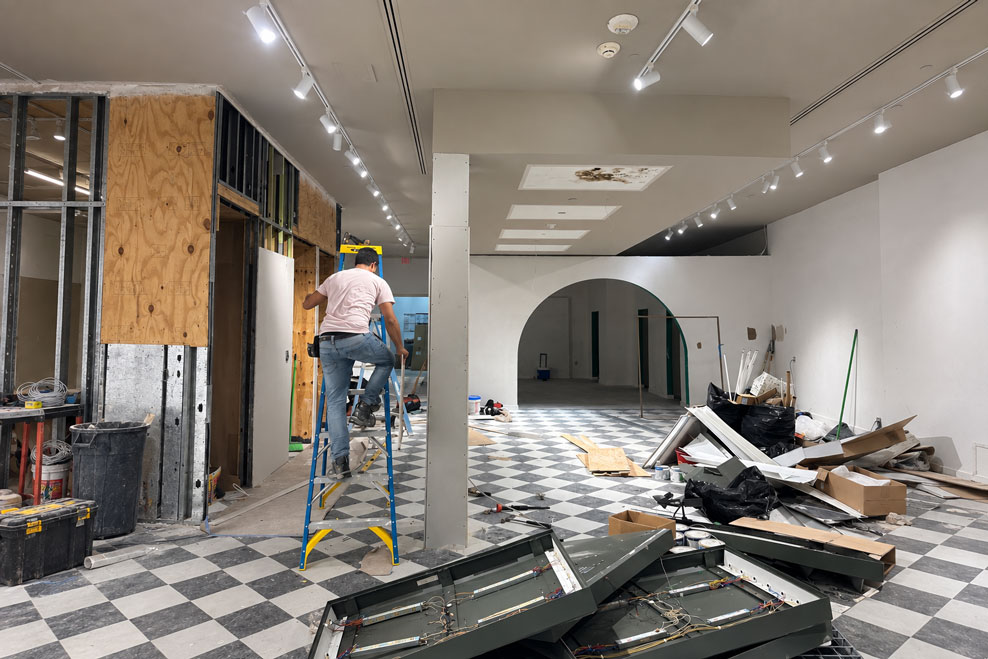
The trap is concept mismatch. A space that operated as a pizzeria for eleven years has a hood sized for deck ovens and a makeup air unit balanced for that load. Drop a wok-heavy Asian kitchen or a wood-burning grill into it, and the exhaust volume, the fire suppression nozzle layout, and the makeup air all get re-engineered. At that point you have paid for demolition on top of new work. The Florida Department of Business and Professional Regulation also requires a fresh plan review any time the kitchen layout changes or equipment moves, so the “already approved” argument does not hold.
What to verify before you sign the lease
Walk the space with a general contractor before the letter of intent becomes a lease, not after. The items that decide whether a second generation space is a bargain or a trap are the grease interceptor size and its location, the existing hood CFM rating and its exhaust routing, the panel schedule and available amperage, the incoming gas service and meter size, the age and remaining life of the rooftop units, the restroom count and ADA compliance against your proposed occupant load, and whether the previous tenant pulled permits for the work you see. That last one catches people constantly. Unpermitted work in the space becomes your problem the moment you apply for a permit of your own.
Also confirm what the landlord is delivering. A work letter that promises “vanilla shell” in one building and in another means bare slab with a capped water line. Read the actual definition in your lease exhibit.
Where the money actually goes in a restaurant budget
Owners consistently overestimate what finishes cost and underestimate what happens behind the walls. Kitchen and MEP infrastructure typically represents 20 to 30 percent of hard costs on a full service project. That single category is the reason restaurants price so far above office or retail work.
Typical South Florida line items in 2026:
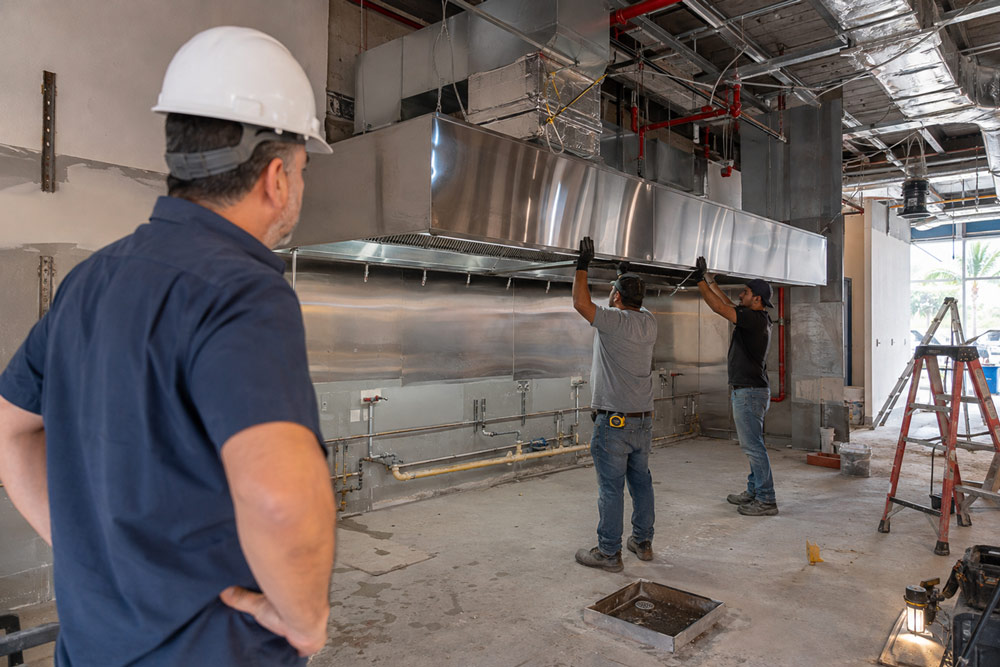
- Type I hood with fire suppression and makeup air: $25,000 to $75,000 installed
- Walk in cooler and freezer, including refrigeration: $12,000 to $45,000
- Grease interceptor, exterior in ground with utility approval: $9,000 to $35,000
- Electrical service upgrade and distribution: $15,000 to $90,000 depending on whether the building has spare capacity
- HVAC for the dining room, balanced against kitchen exhaust: $18,000 to $60,000
- Plumbing rough and finish, including floor sinks and the three compartment sink: $30,000 to $85,000
- Bar buildout with die, draft system, and undercounter refrigeration: $25,000 to $120,000
- Millwork, banquettes, and host station: $20,000 to $150,000
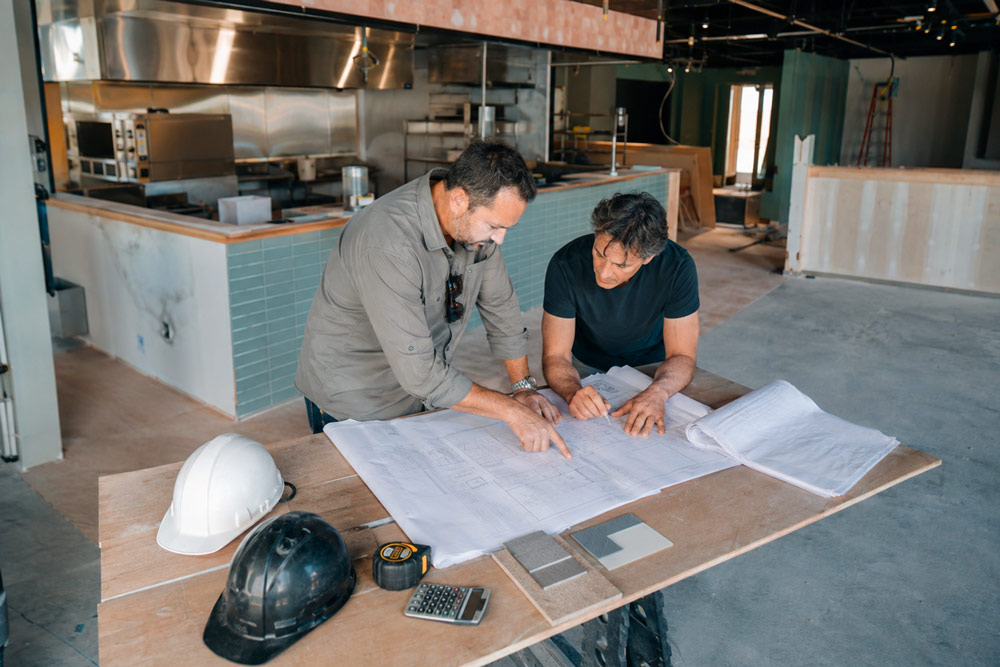
Notice how wide those spreads are. The variance is not vagueness. It reflects real conditions in the building, and the only way to narrow it is a preconstruction walk with the actual subcontractors who will do the work. Any commercial construction firm that hands you a number without sending a plumber and an electrician into the space is guessing on your behalf.
What a Miami restaurant buildout contractor handles in permitting
Two approval tracks run at the same time, and both must close before you can open the doors.
The first is the building permit, covering architectural, mechanical, electrical, plumbing, and hood suppression, plus separate fire alarm and fire sprinkler permits. Miami-Dade County contains more than thirty separate permitting jurisdictions, and a Doral project follows a different process than a Coral Gables project two exits away. Broward works the same way. Fort Lauderdale, Hollywood, Pembroke Pines, and Pompano Beach each run their own building departments, and only unincorporated parcels go through the county. Confirm jurisdiction before you hire anyone.
The second track is the Florida DBPR Division of Hotels and Restaurants. DBPR reviews your kitchen layout, handwash sink placement, finish materials, and equipment schedule against the Florida Food Code. Plan review there typically runs three to five weeks, and a final DBPR inspection happens after construction, before opening. Miss this track entirely, and you will finish construction with a Certificate of Occupancy you cannot use.
Budget for the fees. Miami-Dade calculates permit fees at roughly $13.50 per $1,000 of construction valuation plus plan review charges, which puts a $400,000 buildout somewhere near $5,400 in base building permit fees before fire, health, and utility charges. You will also need a Certificate of Use, grease interceptor approval from the wastewater utility, and in some municipalities a separate sign permit with engineered attachment details.
Hurricane code and what it adds to your storefront
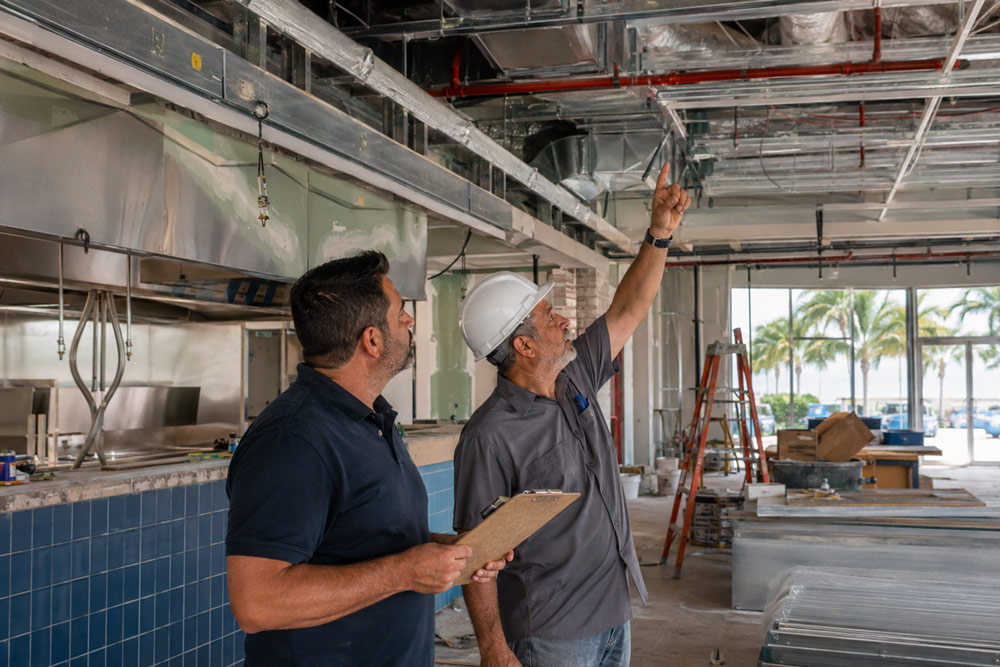
Miami-Dade and Broward sit inside the High Velocity Hurricane Zone, the strictest wind provisions in the Florida Building Code. For a restaurant, that shows up in three places on your budget.
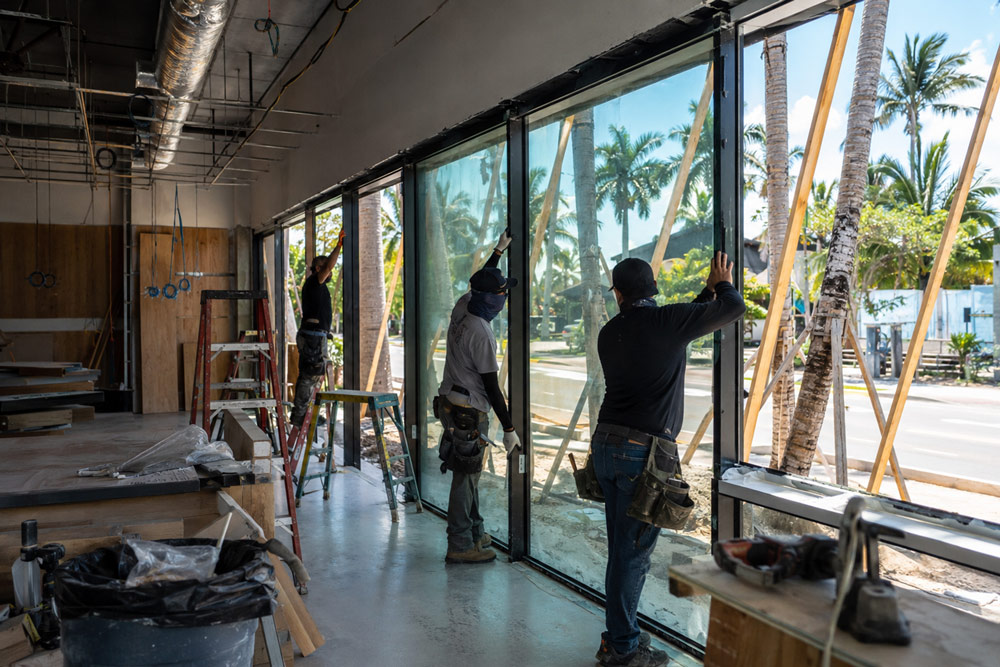
Storefront glazing is the big one. Every exterior opening needs impact rated assemblies carrying a Miami-Dade Notice of Acceptance, and the folding glass walls that make a Las Olas or Delray patio work cost substantially more in an impact rated version than the catalog price a designer pulled from a Texas project. Lead times on custom storefront regularly run twelve to twenty weeks, so it belongs in the early procurement conversation, not the finish schedule.
Rooftop equipment is the second. Makeup air units, condensers, and exhaust fans all require engineered attachment with wind uplift calculations and, on many buildings, structural reinforcement of the deck. The third is anything outside: awnings, pergolas, patio covers, and signage all need engineering and separate permits.
None of this is optional and none of it is fast. It is also the reason an out of state contractor bidding a South Florida restaurant frequently comes in low, then discovers the exterior scope after the contract is signed.
How long a buildout takes from lease signing to opening
Ask five operators how long their buildout took, and you will hear five different answers, mostly because people count from different starting points. Here is the honest full timeline for a Miami or Fort Lauderdale restaurant.
Design and engineering takes four to eight weeks, longer if you change the concept midstream. Permitting takes six to sixteen weeks in Miami-Dade, with Broward plan review on tenant improvements often landing in the two to six week range depending on the municipality and how clean the drawings are. Construction runs fourteen to twenty four weeks for most full service projects. Final inspections, DBPR sign off, and the Certificate of Occupancy add another two to four weeks.
Total realistic window: seven to twelve months from signed lease to first cover. A ground up quick service pad in Boca Raton or West Palm Beach runs six to ten months once site work, civil approvals, and utility connections are included.
Two things compress that window without cutting corners. Design build delivery, where the contractor and the design team price the kitchen, the exhaust, and the storefront together under one contract, typically saves several weeks against traditional design bid build because value engineering happens before drawings are final instead of after bids come back high. The second is deferred submittal strategy, filing the shell and core permit while the hood suppression and fire alarm packages are still being finalized, which is allowed in most South Florida jurisdictions when handled correctly.
That number has a direct financial consequence. If your lease starts rent at day one and your buildout takes nine months, you are paying rent on a construction site for most of a year. Negotiate free rent tied to the permit approval date rather than the lease execution date, and have your contractor give you a written schedule before you sign, so the number you negotiate is grounded in something.
Budget overruns nobody warns you about
Change orders on restaurant projects rarely come from design changes. They come from four places.
Material pricing is unstable in 2026. Steel, aluminum, and copper products carry tariffs of up to 50 percent, derivative products sit at 25 percent, and electrical equipment incorporating those metals carries an additional layer. Nonresidential construction input prices rose at a 12.6 percent annualized pace during the first two months of 2026, the fastest since 2022. A proposal that holds pricing for ninety days is telling you something real about how the contractor manages risk.
Long lead equipment is the second. Electrical switchgear and distribution equipment can run thirty to fifty two weeks in some markets because data center demand has absorbed manufacturing capacity. If your project needs a new service, that order goes in during design, not after permit issuance.
Existing conditions is the third, and it is the most common. Older buildings along Federal Highway, in Hollywood, and across Miami Beach hide surprises behind the drywall: undersized water service, cast iron drain lines at the end of their life, no accessible path for the grease line, structural members where the hood shaft needs to go. Carry a contingency of 10 to 15 percent on a second generation space and 8 to 10 percent on new shell work.
Owner supplied equipment is the fourth. When you buy the kitchen package yourself and it lands three weeks late, the general contractor’s crew has already demobilized. Coordinate delivery dates against the construction schedule in writing.
How to read a bid from a Miami restaurant buildout contractor
Three bids on the same set of plans can vary by 40 percent, and the lowest is almost never the cheapest by the time you get your Certificate of Occupancy. Read them structurally.
Ask for a line item schedule of values rather than a single lump sum. A number broken into thirty trades tells you what the contractor actually priced. Then check the allowances. A bid carrying a $30,000 allowance for millwork when your drawings clearly show $110,000 of custom work is not a lower price, it is a deferred one. Read the exclusions page carefully, because that is where fire alarm monitoring, permit fees, impact fees, grease interceptor pumping, and equipment set frequently live.
Questions worth asking before you sign
Verify the Florida CGC or CBC license number directly on the DBPR licensee search, and confirm general liability and workers compensation coverage naming you as additional insured. Ask which municipalities the firm has pulled restaurant permits in during the last two years and request the addresses. Ask who the project manager is and how many jobs that person is running concurrently. Ask how change orders get priced and approved. Ask for two references from restaurant owners whose projects finished more than a year ago, because a reference called during construction will always sound positive.
A serious commercial general contractor answers all of that without hesitation and usually offers the information before you ask.
Build with a team that has done this in South Florida
Restaurant buildouts punish guesswork. The cost ranges in this guide will get you to a defensible budget, but the number that matters is the one produced after a licensed contractor walks your specific space, checks the panel and the plumbing, prices the exterior scope against hurricane code, and maps your schedule against the permitting office that actually has jurisdiction.
NAR Construction Development builds commercial spaces across Miami-Dade, Broward, and Palm Beach counties from our base in Hollywood. Restaurants and hospitality, retail stores, offices, gyms, studios, and wellness spaces. We handle preconstruction pricing, permitting through every South Florida jurisdiction, and construction under one contract, so the schedule you agree to is the schedule you get.
Contact NAR Construction Development for a preconstruction walkthrough and a line item budget on your space. If you are still evaluating locations, bring us in before the lease is signed. That conversation costs you nothing, and it is the single best money-saving move available to a restaurant owner. Working with an experienced Miami restaurant buildout contractor early is what separates a project that opens on schedule from one that bleeds rent for a year.