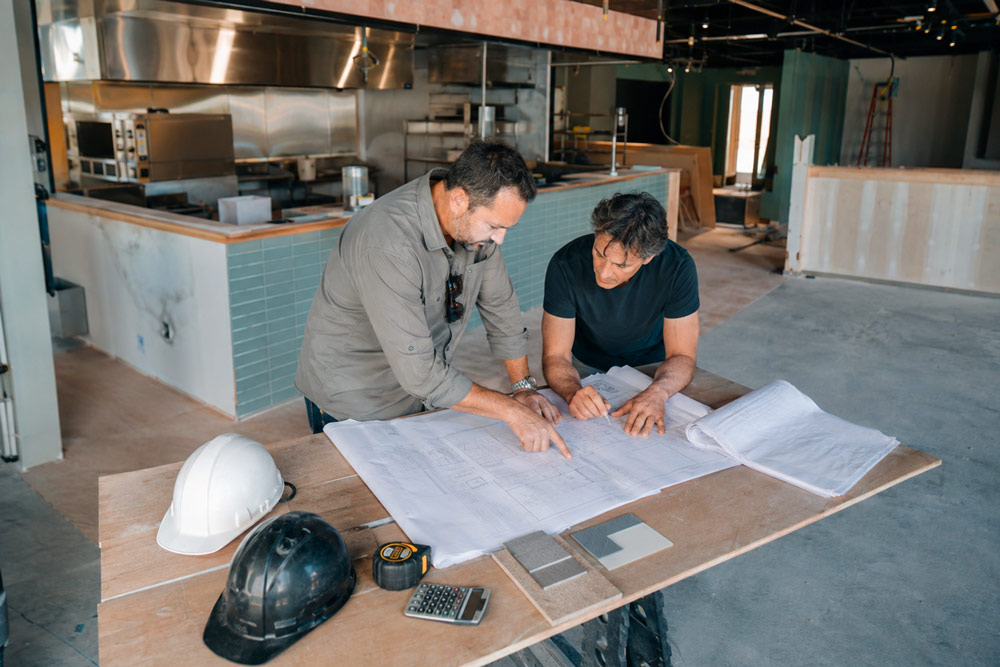
Every commercial buildout in Miami runs through the same gauntlet. Permitting, code review, inspections, and a contractor who either moves through that process or slows it down. Business owners searching for commercial buildout contractors in Miami are usually past the planning stage. They have a lease, a location, and a deadline. They need a contractor who can turn empty square footage into a working store, restaurant, office, or studio. Months of delay are not part of the plan.
Miami-Dade, Broward, and Palm Beach counties each run their own permitting offices. A contractor fluent in one jurisdiction is not automatically fluent in the next. That gap alone can add weeks to a timeline when the wrong contractor gets the job. This guide covers what a commercial buildout involves and how the work changes by industry. It also covers what to check before you sign a contract.
In This Article:
- What a commercial buildout contractor does
- Why Miami commercial buildouts require local expertise
- Retail store construction and buildouts
- Restaurant and hospitality construction services
- Gyms, studios, and wellness space construction
- Commercial office construction and interior buildouts
- How to choose commercial buildout contractors in Miami
- Common commercial buildout mistakes to avoid
What a commercial buildout contractor does
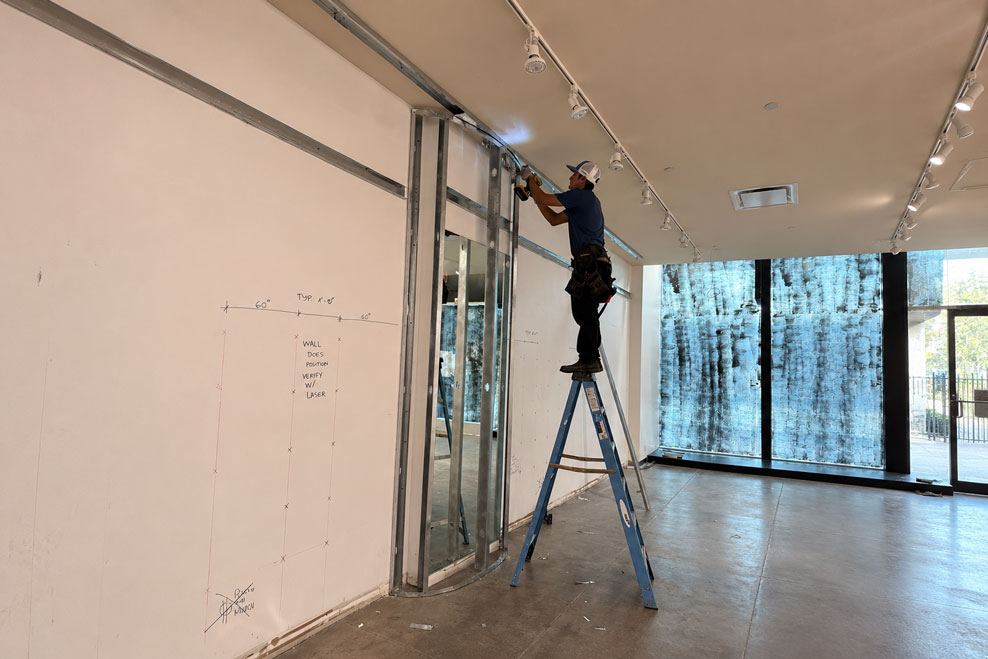
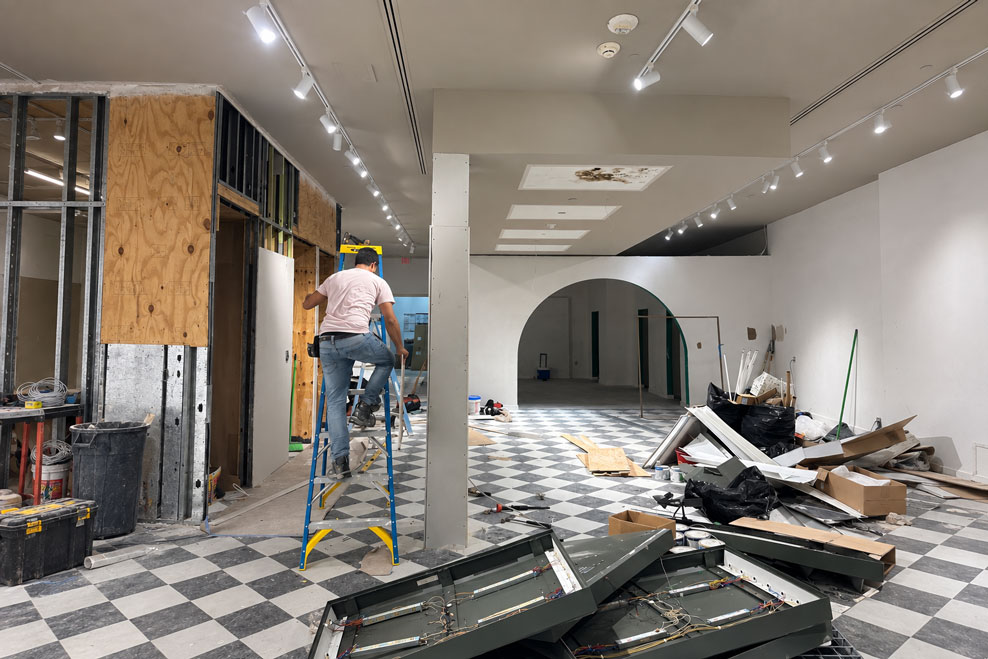
A commercial buildout is the interior construction that turns a raw or previously occupied space into a functioning business. It differs from ground-up construction, where a building goes up from a bare lot. A buildout usually starts inside four walls the tenant does not own. That might be a shell space in a plaza, a vacant restaurant, or an office suite the last tenant left.
Commercial buildout contractors coordinate the trades that turn that shell into a finished space. That includes demolition, framing new walls, running electrical and plumbing, installing HVAC, hanging drywall, and laying finishes. It also includes the parts owners tend to underestimate. ADA-compliant restrooms and entries come first, then fire sprinkler and alarm work that the fire marshal has to sign off. After that comes the final building inspection that leads to a certificate of occupancy. A contractor who manages all of it under one schedule keeps the job moving. Handing pieces off to separate vendors is usually why a buildout stalls in inspections instead of opening on time.
Buildout work versus ground-up construction
People confuse the two often, and the distinction matters for budgeting. Ground-up construction starts with site work, a foundation, and a shell that does not exist yet. That means a longer timeline and a different set of permits from day one. A buildout inherits an existing shell, so the scope centers on interior systems and finishes rather than structure. Some projects sit in between. A second-generation restaurant space might need a new roof-mounted HVAC unit. That blends buildout work with a piece of structural and mechanical scope closer to new construction.
What is usually included in the scope
A typical commercial buildout scope covers demolition, framing and drywall, electrical and lighting, and plumbing rough-in and fixtures. It also covers HVAC distribution, flooring, ceiling grid and tile, millwork, paint, signage coordination, and life safety systems. One item to confirm in writing before signing: landlord-owned base building work. That covers things like the main electrical panel upgrade or roof access for new mechanical equipment. Contracts that leave this ambiguous are where change orders tend to start.
Why Miami commercial buildouts require local expertise
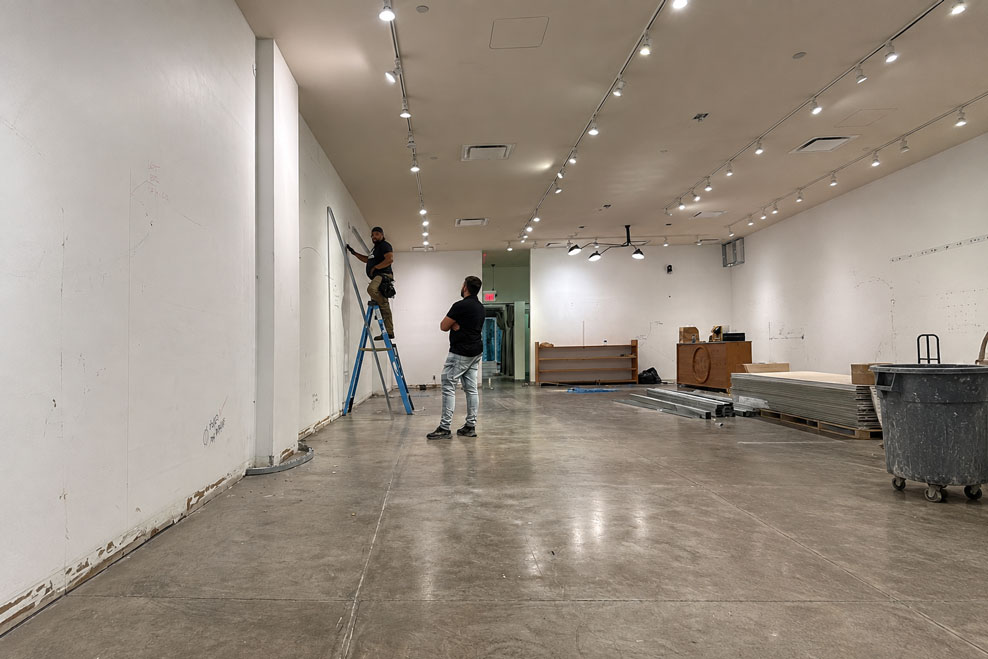
South Florida construction runs on rules that do not apply everywhere. Miami-Dade and Broward sit inside the High Velocity Hurricane Zone under the Florida Building Code. That zone sets stricter rules for exterior openings, roof attachments, and impact-rated glazing than most of the state. A contractor who has only worked outside that zone will run into permit rejections here. A Miami-based crew would never hit those in the first place.
Flood zone designations add another layer, particularly for ground-floor retail and restaurant spaces near the coast. Zoning also varies block by block. Signage and parking rules in a Fort Lauderdale mixed-use corridor can differ from a strip in Hollywood or Boca Raton. West Palm Beach runs its own review process on top of that. Commercial buildout contractors Miami business owners can rely on already know which office reviews a given permit set. They know how long that office typically takes, and what sends a plan set back on the first pass.
Permitting pace varies by jurisdiction
Plan review timelines shift depending on which office handles the set and how busy that office is. The same scope can clear review faster in one Broward city than with Miami-Dade in the same month. Neither timeline is fixed. A contractor who files regularly in a given jurisdiction has a working sense of current turnaround. That contractor sets realistic expectations up front instead of promising a date no one controls.
Retail store construction and buildouts
Retail buildouts run on a short clock. A national or regional brand opening in a Miami plaza usually has a lease date and a fixturing schedule. The grand opening often sits on the calendar before construction begins. That leaves little room for permitting surprises. Retail contractors handle storefront glazing, ADA-compliant entries and thresholds, and point-of-sale and low-voltage rough-in. They also handle fitting room and stockroom layouts. Then there is the plaza landlord’s own rulebook, which often dictates work hours, dumpster placement, and approved contractor lists.
Retail store construction also involves a landlord’s own base building conditions. Many older strip centers in Miami-Dade and Broward date back decades. Bringing a unit up to current code can mean upgrading electrical service or replacing aged plumbing lines. That work comes before the visible finish work even starts. A contractor who inspects the shell before pricing the job avoids change orders from mid-construction surprises.
Franchise and multi-location retailers add another layer. Corporate design standards cover storefronts, ceiling heights, and lighting temperature. All of it has to line up with what the local building department will actually approve. When a corporate prototype drawing hits a Florida-specific code requirement, someone has to reconcile the two before filing permits. A contractor who has built several locations for one brand in South Florida knows where that friction shows up.
Restaurant and hospitality construction services
Restaurant buildouts carry more regulatory weight than almost any other commercial category. A kitchen hood system needs fire suppression that ties into the building’s alarm. The grease trap has to match the menu and the sink count. The health department reviews the space separately before it can open. HVAC has to account for kitchen exhaust makeup air. That changes the mechanical load compared to a standard office or retail unit.
Restaurant and hospitality construction services also cover bar layouts and walk-in cooler placement. A liquor license brings its own buildout requirements. Each of these touches a different inspector. Fire marshal, health department, building department, and sometimes the state Division of Alcoholic Beverages and Tobacco. A general contractor who has run this sequence in Miami-Dade or Broward knows which inspections can run in parallel. Knowing which ones have to happen in a fixed order shortens the path to opening night.
Outdoor seating and patio buildouts
South Florida’s climate puts outdoor and covered patio seating into many restaurant projects. Patio buildouts bring their own permitting questions. Does the space count toward occupancy load? What are the sidewalk and right-of-way rules in that particular city? Do shade structures or outdoor bars need a separate review? Owners who treat the patio as simple, low-cost scope usually meet a second round of plan review.
Gyms, studios, and wellness space construction
Fitness and wellness spaces have their own construction logic. Flooring has to handle repeated impact from free weights or group classes without cracking the slab underneath. Class and spin studios need sound isolation so noise does not carry into neighboring units. That comes up constantly in mixed-use plazas and office buildings across South Florida. Locker rooms and showers push plumbing and ventilation closer to a light commercial project than a standard office fit-out. ADA-compliant shower and changing areas are non-negotiable in plan review.
Ventilation matters more here than in most commercial spaces. A full class of people in one room raises both heat load and air exchange requirements. Gyms, studios, and wellness space construction done right accounts for equipment weight loads on the structural slab. It also covers dedicated circuits for cardio equipment and enough electrical capacity for later additions. Otherwise the owner is opening walls again a year after opening day.
Specialty wellness spaces
Medical spas, physical therapy studios, and recovery-focused wellness spaces bring an added layer beyond a standard gym. Treatment rooms need privacy, and hydrotherapy or specialized equipment needs its own plumbing. Some health services on site also carry separate licensing. A contractor building these spaces sequences plumbing and electrical rough-in around equipment the owner has not picked yet. The contract should treat owner-furnished equipment coordination as its own line item.

Commercial office construction and interior buildouts
Office buildouts range from a single open floor plan to a full multi-suite renovation. That larger version brings private offices, conference rooms, and a reception area. The construction is often less regulatory than a restaurant or gym, but the coordination is harder. Many office buildouts happen while other tenants still occupy the same floor or building. That means noise restrictions, after-hours work windows, and shared freight elevator scheduling.
Data and electrical infrastructure tend to drive the budget on modern office projects. Most tenants now need more low-voltage cabling, dedicated circuits, and server room cooling than the original space supports. Landlords in Miami, Fort Lauderdale, and West Palm Beach commonly offer a tenant improvement allowance toward this work. A commercial interior general contractor who understands how to draw down and document that allowance saves the tenant real money. Otherwise the tenant covers costs the landlord should have reimbursed.
Phased buildouts in occupied buildings
Office buildouts inside a building with other active tenants usually run on a phased schedule. Demolition and framing might happen after hours or on weekends. Quieter finish work runs during the day. A contractor unfamiliar with a building’s rules can lose days booking freight elevator time. Coordinating with building management on noise windows costs time too. Confirm these logistics with the property manager before setting the schedule. Otherwise paperwork eats the first week instead of construction.
How to choose commercial buildout contractors in Miami
Licensing is the first filter. Florida’s Department of Business and Professional Regulation lists active contractor licenses and any disciplinary history. Checking it takes two minutes before a first phone call. Beyond the license itself, ask which counties and cities the contractor has pulled permits in recently. A contractor who has never filed with Miami-Dade’s building department will learn that process on the client’s dollar.
References matter more than a portfolio page. Ask a contractor for a project similar in size and use to your own. Then call that owner directly and ask how the schedule held up against the original promise. Look closely at how the contract handles change orders. A vague allowance for unforeseen conditions is where budgets quietly grow. Confirm insurance coverage and bonding before signing anything. Business owners evaluating commercial buildout contractors in Miami should trust the paperwork over the sales pitch.
Questions worth asking before signing
Start with communication. Does the contractor run a weekly site walk, share a live schedule, or handle it less formally? That shapes how quickly problems surface. Find out who manages the day-to-day work. It might be a dedicated project manager or the same person juggling several other jobs. One more question: what happens if the building department rejects a permit on first submission? Rejections happen often enough that the answer says a lot. None of these questions have a single right answer. A contractor who answers them plainly, without redirecting to price, is usually the one worth hiring.
Common commercial buildout mistakes to avoid
The most expensive mistake happens before construction even starts. Owners sign a lease without confirming the city will permit the space for the intended use. A former retail unit does not automatically clear zoning for a restaurant. A change of use can trigger a full code upgrade that nobody budgeted.
Underestimating how long a certificate of occupancy takes is the second most common problem. Owners plan an opening date around the construction schedule alone. Final inspections, fire marshal sign-off, and CO issuance add real time on top of the last day of work. Picking a contractor on price alone is the third mistake. Check whether the low bid actually includes the same scope as the higher bids. Treating ADA compliance as an afterthought rather than a design input forces expensive rework. The building department will flag it during plan review.
One more mistake shows up after construction is already underway. Owners confirm the general contractor’s license and stop there. Every subcontractor on site needs an active license and insurance too. A general contractor’s license does not automatically extend to every trade working under them. A lapse there can hold up a final inspection even when the visible work looks finished. Ask for subcontractor documentation up front, before an inspector asks for it. That keeps the schedule from stalling at the last step.
Start your commercial buildout with a Miami contractor who knows the process
A commercial buildout in Miami touches permitting offices, code requirements, and inspection sequences. All of it shifts depending on the county, the city, and the type of business going in. Business owners, tenants, and developers should choose commercial buildout contractors in Miami with direct local experience. Look for work across retail, restaurant, wellness, and office projects. That avoids the delays of a contractor learning local requirements on the job.
NAR Construction Development is a licensed commercial construction company based in Hollywood, FL. The company serves Miami-Dade, Broward, and Palm Beach counties. Work covers retail buildouts, restaurant and hospitality construction, gym and wellness space projects, and commercial office interiors. Contact NAR Construction Development to walk through your space, your timeline, and what it takes to open your doors.